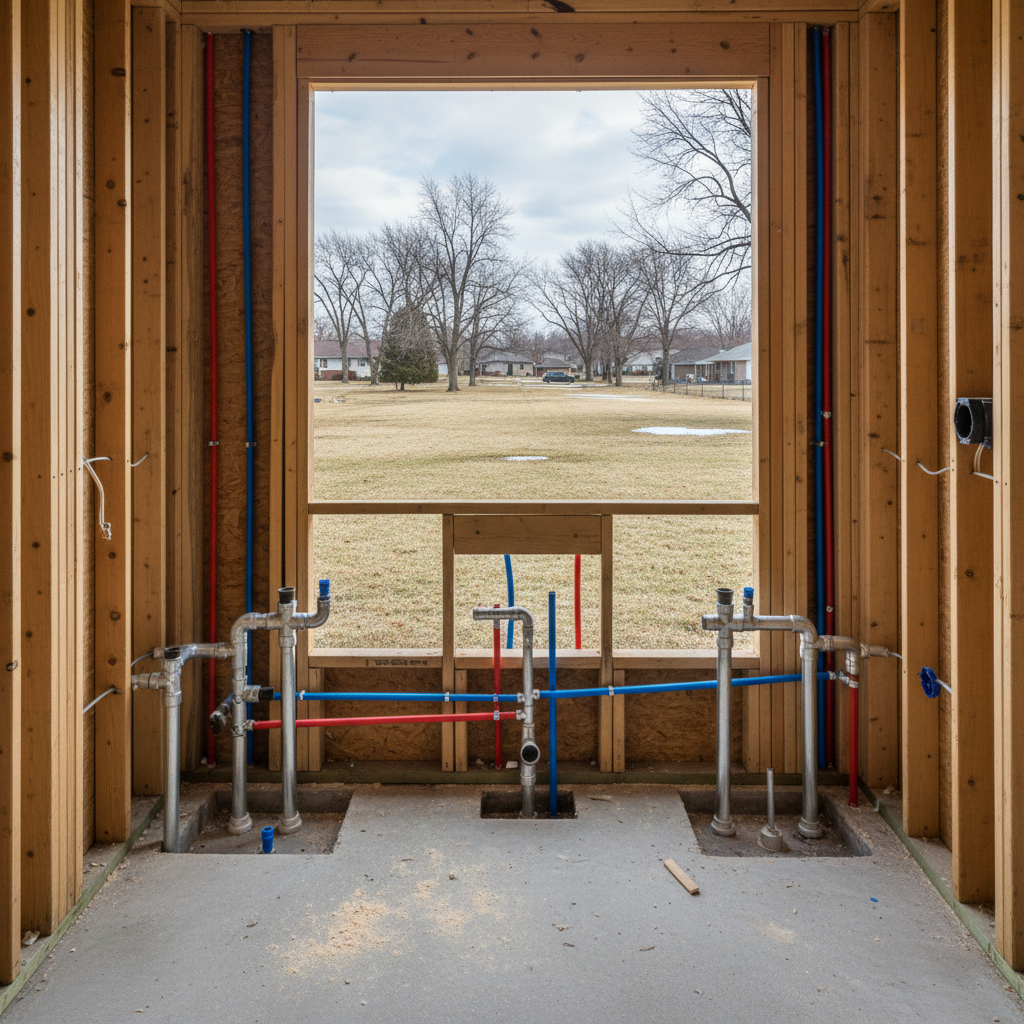
So, you're planning a big renovation — maybe adding a new bathroom or finally getting that dream kitchen. That's exciting! But before you start picking out tile or cabinet colors, you've got to get the guts of the project right. I'm talking about the plumbing rough-in. This isn't the glamorous part, no, but it's absolutely critical. Get this wrong, and you're looking at major headaches and expense down the road. Let's walk through what you need to know to make sure your Freeport plumbing rough-in goes smoothly.
What Even Is a Plumbing Rough-In?
Simply put, the rough-in is when all the water supply lines, drainpipes, and vent pipes go in. They're installed inside the walls, floors, and ceilings, but before any drywall or finished flooring goes in. It’s basically the skeleton of your plumbing system. You won't see any faucets or toilets yet; it's just the pipes sticking out where those fixtures will eventually connect. This is also when the main water supply and drain lines get hooked up to the house's existing system.
Timeline: What to Expect
A plumbing rough-in isn't usually a weeks-long affair for a single room, but it's a really important step in a longer process. Here’s a general idea of the timeline:
- Planning & Design (Weeks to Months): This is where you decide where everything goes. Don't rush this part. Where do you want the shower? The toilet? The sink? These decisions dictate the rough-in.
- Permits (Days to Weeks): You absolutely need permits for plumbing work in Freeport. Your contractor should handle this, but make sure it's part of the plan. Inspections are a big deal here.
- Demolition (1-3 Days): If it's a renovation, the old stuff has to come out first.
- Rough-in Installation (3-7 Days, typically): This is the actual pipe-laying. It can vary based on how complex the job is – a half-bath is quicker than a master suite with multiple fixtures, for instance.
- Inspection (1 Day): Once the rough-in is complete, the city inspector comes out to make sure everything meets code. Nothing gets covered up until this passes. This is non-negotiable.
- After Inspection: Only once the rough-in passes inspection can other trades like electricians, HVAC, and then drywallers come in.
Don't let anyone tell you they can skip the inspection. It's there to protect you, the homeowner, from shoddy work and future problems.
Preparing for the Chaos
Let's be real, a rough-in is messy. Your walls will be open, floors might be torn up, and there will be dust. Here's how you can prepare:
- Clear the Area: Move furniture, artwork, and anything valuable out of the work zone. Cover anything that can't be moved with plastic sheeting.
- Access: Make sure your plumbers have clear access to the work area, the main water shut-off, and any existing drain lines they'll be connecting to.
- Temporary Arrangements: If you're losing a bathroom or kitchen, plan for temporary alternatives. A utility sink in the basement can be a lifesaver.
- Communicate: Talk to your contractor about their schedule. Know when they'll be there and what they need from you.
Remember, we often deal with older homes in Freeport, especially in areas like the Lincoln-Douglas neighborhood. These homes can have unique challenges, like original cast iron pipes or outdated layouts. A good plumber will account for this in their plan.
What to Ask Before Signing a Contract
This is where you protect yourself. Don't be afraid to ask tough questions. Any reputable contractor, like us at Mighty Kitchen Solutions, will appreciate your thoroughness.
- Are you licensed and insured in Illinois? This is non-negotiable. Ask for proof.
- What permits are required, and who is responsible for getting them? It should be the contractor.
- What's included in the rough-in price? Specify fixtures, materials (PEX, copper, PVC), labor, and clean-up.
- How do you handle unforeseen issues? Older homes often hide surprises. What's the process and cost if you hit an unexpected problem, like a rotten subfloor or a main drain line that needs replacing?
- What's your warranty on the rough-in work? A good contractor stands behind their work.
- Can you provide references from recent rough-in projects? Talk to those homeowners.
- What's the payment schedule? Never pay the full amount upfront. A reasonable deposit, progress payments, and a final payment upon satisfactory completion and inspection are standard.
- What's the estimated timeline for the rough-in phase? Get it in writing.
Getting your plumbing rough-in done right is foundational to a successful renovation. It's not the most exciting part, but it's the one you'll be glad you paid close attention to years down the line when everything's working perfectly. Take your time, ask questions, and choose a contractor you trust. It'll save you a lot of grief in the long run.